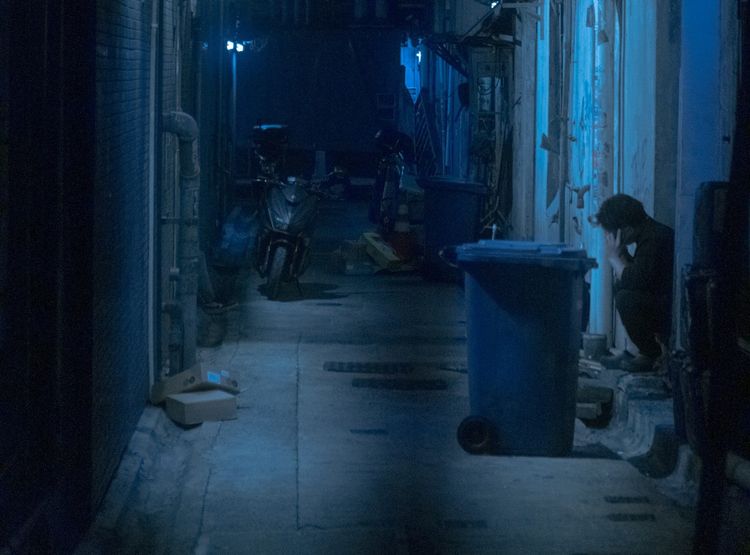
Craft Talk: Don’t Ask A Poem To Do The Work Of An Essay
We do not, and we should not, assume that the speaker of a poem is autobiographically identical with the poet, even when the poem is written in the first person, even when we know that the speaker and the poet share some aspects of the experience the poem contains.
This is the text of a talk I gave at the Jackson Heights Library in September 2025. I wanted to address an experience I have all-too-often when reading what I will broadly call “the poetry of trauma,” poems written by people wanting to work through or bear witness to or in some other way make meaning from a trauma they have suffered/survived. “Why,” I find myself wondering, “isn’t this poem an essay?” I mean that as a serious question, less a critique of the poem itself than an assertion of my own awareness that the author seems less interested in exploring the emotional interior of an experience than in saying something about that experience. More often than not—and this is what I find most frustrating—I really want to know what the author has to say. The problem is that they expect the poem to speak for itself in a way that I think poems just aren’t designed to do. Since I did not want the talk to be about critiquing such poems, which would inevitably raise the question of whose work I was talking about, I focused exclusively on my own practice. Nonetheless, I think there is something here worth investigating further.
I want to thank the Jackson Heights Library—specifically Doris Jones, Kristina Hannaford, and Amy Willis—for inviting me to give this talk and for setting up today’s event. In particular, though, I want to thank them for making room in the library’s programming for a discussion of sexual violence against men and boys. I bring to this discussion my own experience as a survivor of such violence, but for our purposes today I do so as someone whose art-making, if not always the subject of the art itself, is explicitly grounded in that experience. Finally, I want to thank you all for coming.
The phenomenon of sexual violence is of central concern to anyone who cares about human rights, not just in the large, relatively-abstract-to-most-of-us sense of policy-making and law, but also in the concrete, embodied sense of what it means for each of us to live in a society where sexual violence is all-too-common and all-too-often normalized.
The dominant paradigm through which we most commonly discuss and understand sexual violence, however, is that of the male perpetrator and the female victim. Sexual violence against boys and men, if it is discussed at all, is usually framed as a subset of that paradigm, not as a phenomenon and experience that ought to be understood on its own terms. Why that is, and why that approach is problematic, is a discussion well worth having. Today, however, I am going to talk to you about how writing poetry has been one of the ways in which I have come to terms with what the men who violated me did to me when I was a boy. By “coming to terms” I mean not just healing—therapy was far more important in that process—but also, and primarily, keeping a commitment I made to myself very early on: that I should stand always in opposition to the social and cultural values represented by the sexual violence those men perpetrated against me.
It was in the making of poems that I first claimed a voice in which I could name that experience for what it was, and that act of naming has made the difference for me—as it has made the difference for others who have similar stories to tell, as it could make the difference for some of you here today who have not yet told your stories—between living the life I have wanted to live and feeling like the only life I deserved was the shame-filled half-life that the men who violated me tried to force me into.
Two quick comments before I go on: While I am concerned in this talk primarily with my practice as a poet, I am going to tell you parts of my story in some detail—consider this your trigger warning if you need one—in order to illustrate why I think memoir and poetry do very different kinds of work when it comes to writing about an experience like mine. Also, I refer throughout this talk to the men (plural) who violated me because there were, in fact, two men at two different times during my childhood who did so. For the sake of time and clarity, however, I focus here on only one of those stories.
***
Back in 2022, I published a narrative essay called “The First Time I Told Someone,” which unpacks the first time I told someone I’d been sexually abused. The beginning of the essay describes the process by which, when I was twelve, the man I refer to as “the old man in my building” groomed me for the experience this excerpt relates.
Pulling me tight against him, he ran his hands beneath my shirt and up the legs of my shorts; he groped my chest and belly, squeezed my butt, cupped between my legs, all the while whispering hoarsely into my ear, over and over again, “When am I going to see you?”
I had no words for what he was doing, no training such as young children get now in how to attract an adult’s attention or try to scare off an attacker. All I could do was stand there till he was finished. Then I ran. I don’t remember how far or how long or in which direction, but I ran as if I could leave my skin behind, as if running would turn me into another person. When I finally stopped running, in the small park across the street from the Lutheran Church, I sat a long time with the knowledge that my running had undone nothing, that my body was still the body he had touched.
I had no idea what to do with this knowledge, so I kept it to myself and did my best to behave as if nothing had happened. Sometime later, though, I was sitting with some friends in front of my building when the old man came home from food shopping and asked me to help him upstairs with the bags in his shopping cart. I wanted to say no, of course, but I didn’t know how, not without raising for my friends the question of why I was being rude. The last thing I wanted was to explain myself to them. This, again, is from the essay:
“I’ll give you a dollar,” he said, when he saw my hesitation. “No, two,” he insisted, as he took a wad of bills out of his pocket, peeled off two singles, and nodded towards the top bag.
I took the money from his hand—I did not know what else to do—picked up the bag he pointed to, and followed him upstairs, where he opened the door and motioned me in ahead of him. I stepped inside, thinking I’d leave the bag by the door and get out as quickly as I could, but he was too fast for me. He closed and locked the door behind him before I could turn around, then took the bag from me and dropped it to the floor. The cans at the bottom landed with a crash that shook the whole apartment. With his hands on my shoulders, he gently guided me further inside. Then he snaked his arms around my waist, undid my belt and unzipped my pants, pushing them down so they fell around my ankles.
All I could do was stand there, frozen to the spot where my feet had stopped moving.
Looking down at me with a wide smile—he’d come around to face me and I have the distinct memory that he was suddenly missing his two front teeth—his eyes, at what I imagine must have been the fear in mine, grew tender. “You’ve never had a blowjob before, have you? Don’t you want me to love you?”
In the silence with which I responded, he pulled down my underwear and took my penis in his hands—I remember thinking his fingers were like a cage—and he told me how beautiful and big it was, how good he wanted to make me feel, and then somehow I was sitting on the couch that had been a few steps to my right, my pants still at my ankles, and his own pants were down, and his penis, large and reddish purple and semi-erect, hung in front of my face.
His voice came from somewhere above me, urging me to play with it, at least to touch it, and the next moments are blurred in my memory, but I can still feel his hands on either side of my head, the steady pressure of his fingers at the hinges of my jaw, and even now, fifty years later, I still gag a little each time the damp metallic taste of him fills my mouth.
I don’t remember getting dressed, but I can see myself unlocking his front door—he’s still standing by the couch—and walking out of his apartment.
The rest of that day is a blank to me.
The following day, the old man saw me standing by myself in the courtyard. He stood a short distance away and pleaded with me to go upstairs with him again. This time, he promised, would be different. He would move more slowly, be more gentle. I stood there, staring off into space. “No!” I said without looking at him, and then I ignored him until he walked away.
He did not speak to me again for the rest of the time he lived in my building.
§§§
I tried in this essay to tell my story as accurately and in as much detail as possible, because part of the contract a writer of nonfiction narrative has with their readers is that the story they are telling is both factual and true, which in the case of first-person narration means that the narrator is autobiographically identical with the writer. If I had done otherwise—if I had presented as fact a story that was entirely fictional or if I had fictionalized so much of it that it would no longer be recognized as my story to anyone who knew the truth—why should anyone give any credence at all to what I have to say?
This matters because I did not write “The First Time I Told Someone” simply to relate the experiences I recount in its pages; I wrote it because I had something to say about those experiences that I thought was worth saying—that I thought, in other words, it was worth someone else’s time and perhaps money to hear. The contract between poets and their readers, however, is very different. We do not, and we should not, assume that the speaker of a poem is autobiographically identical with the poet, even when the poem is written in the first person, even when we know that the speaker and the poet share some aspects of the experience the poem contains. In an essay called “The Necessity to Speak,” the poet Sam Hamill calls this first person speaker “the first person impersonal,” which he defines as permission, though I would call it an invitation, for readers to enter the experience of the poem.
Experience is a crucial word here. When I write a poem, my goal is to render the emotional interior of an experience in all its overdetermined complexity, not tell a reader what happened to me and why it mattered. By way of example, I’d like to share with you the first poem I published that deals with the sexual assault I just told you about. It’s called “The Taste of A Little Boy’s Trust” and it’s from my first book, The Silence Of Men:
The Taste of A Little Boy’s Trust
Snow still falling this late, when each house framed by the window above my desk
is dark, and even my wife’s breathing has grown indistinguishable from the quiet, snow still falling
as a truck rolls by, big-cat-svelte on eighteen wheels, orange running lights spreading
up and down my block a Halloween glow in mid-December,
like a space vessel landing, bringing me the boy I was standing in the courtyard, searching
the descending whiteness for the shapes of ships I longed to fly away on,
snow still falling this late when I could be sleeping, the way I should have been
the night I saw my mother nude, and her friend on his back, and them both too slow to hide what they were doing,
and I told my brother and we tried it, and we tried to understand why grown-ups did it—how could you let someone
pee in your mouth?—snow still falling this late is the whisper we tried to laugh in, breath the old man dropped, syllable—
when—by syllable—will I see you?—into my ear, and I couldn’t move, wouldn’t,
and so it wasn’t me who followed him upstairs, who listened to the lock click shut in the door, and it wasn’t me
whose belt he unbuckled, and when his pants joined mine on the floor, it wasn’t me he pled with, whose head he used
both hands to pull towards him when I balked, whose mind at this moment always whites out
until it wasn’t me who unlocked the door and walked to where the snow is still falling,
as if even now he waited in the apartment above mine, and no matter how many times
my brother asks, I won’t go out, not even to be first sled down a virgin hill of the season’s new snow.
You know, because I have told you, that the experience of sexual violence at the heart of this poem is mine, but the point of the poem, to the degree that we can say a poem has a point, is to render what it feels like not to be able to escape that experience as a point of reference in your life. I did not want this speaker’s story to be identical with mine, in other words. Rather, I wanted it to be a story anyone could enter.
Let me explain. I have a mother, of course, and I had a brother—he died a long time ago—but those characters in the poem, and the events in which they are involved, are fictional. More to the point, I intentionally rendered the interaction between the two brothers so it would be open to interpretation. For example, did you understand both the speaker and his brother to be young enough that their encounter might reasonably be understood as innocent? Or, since the poem does not specify their ages or who does what to whom, did you understand the speaker to be manipulating his brother into the act of oral sex the poem alludes to? Or, given the end of the poem, do you see things the other way around? I’ve heard all three readings, and I think you can make an argument for each of them.
“The Taste of A Little Boy’s Trust,” in other words, is not about what happened to me. Instead, it builds around the core of my experience an opportunity for you to enter what it feels like to be a man like me—or like the man I was when I wrote the poem more than twenty years ago—for whom even the simplest moment (looking out the window during a snowstorm, when everything around him seems to be peaceful) leads his thoughts inescapably back to his own sexual victimization.
This post is for paying subscribers only
Subscribe to continue reading
You might also like
Four by Four #59
Four Things To Read, Four Things To See, Four Things To Listen To, and Four Things About Me
On My Desk Now: Why I’ve Gone Back to Read Essays I Wrote About Reproductive Rights and Masculinity Almost Forty Years Ago
paid-only post
It's The Twenty-Fifth Anniversary of the September 11th Attacks and It's Erev Rosh Hashanah
If you are celebrating, Shana Tovah! I hope we all get the sweet and fulfilling and meaningful and just and peaceful year that we all deserve.
Learning To Love The Questions: Do All Writers Write with a Feminine Soul?
My body, in other words, physically rejects the idea that I write as anyone other than the man I am or that my experience as a man is therefore any less inclusive of everything you mean when you use the phrase “feminine soul.”
In The Town That Taught Me How To Live Like Prey
I may not look over my shoulder when I walk down the street the way I did back then, but there are definitely places in both this country and out in the world at large where I wonder how safe I would be as a Jew who insisted on being visible as a Jew.