Four by Four #56
Four Things To Read, Four Things To See, Four Things To Listen To, and Four Things About Me

On Saturday, June 27 at 2 PM, I will be reading online with Hassanal Abdullah and Indran Amirthanayagam in the Brownstone Poetry Series. There’s a $5 admission fee. These are the instructions for attending:
If you can make it, that would be lovely!
Toward Nakba as A Legal Concept, by Rabea Eghbariah:
The breakdown of Nakba into foundation, structure, and purpose provides an analytical roadmap for the various legal questions at play. The foundational element allows us to consider the crimes committed during the 1948 Nakba and the unresolved legal questions stemming from the establishment of the State of Israel over Palestinian ruins. The structural element allows us to examine the various forms of domination practiced by the Israeli regime that emerged from that violence. The discussion about apartheid is thus located within the structural element of the Nakba. The purpose—denying Palestinians the right to self determination—allows us to reconsider the legal questions pertaining to the denial of territorial integrity and ability to exercise self-determination as a group. Taken together, these elements form a legal anatomy of the ongoing Nakba.
I wrote back in Four by Four #40 about the difficulties Eghbariah had trying to get this article published, and I would recommend reading his interview with Joshua Abramson Cohen as an introduction before diving into this long, deeply researched, historically informed, and meticulously argued legal essay. (I’ve read through the article once. It will take several more fully to process it.) Essentially, Eghbariah argues that while each of the three axes along which Israel’s treatment of the Palestinians have typically been understood accurately describe some aspects of that treatment—settler-colonialism, apartheid, and genocide—they are ultimately inadequate because they tend to isolate discrete aspects of what Israel does in ways that prevent understanding it as a system. There is no doubt that the historical analysis out of which Eghbariah’s argument emerges is a contested one, but not to wrestle honestly with that analysis and with the question of why it is contested in the ways that it is—especially if you call yourself a Zionist—is, in my estimation anyway, to be intellectually dishonest at best. Regardless of which side of this issue you find yourself on, if you care about accounting for its full complexity, I think you owe it to yourself to read this piece.
§§§
To Phrase a Prayer for Peace, by Donna Spruijt-Metz:
from Day 63
I walk
through my unbombed neighborhood—
I sit in my white
studio to write to YOU—
More than any poem in this very moving book, which at its core is a diary Spruijt-Metz kept during the first 120 or so days of Israel’s war on Gaza, these four lines capture the essence of the struggle—spiritual, ethical, moral—that I think any American Jew of good conscience faced in coming to terms with the brutal reality of Hamas’ attack, on the one hand, and, on the other, the far more brutal reality of Israel’s response. While the poems gesture at times towards the contested historical context(s) through which all sides to that conflict give it meaning, Spruijt-Metz is more concerned with trying to reconcile the “unbombed” comfort in which she lives with both the inevitable concerns Hamas’ attack raised about Jewish safety and the concerns about Jewish identity and community raised by Israel’s response. Spruijt-Metz holds herself accountable for the privilege of her position by weaving the mundane details of her life through the book like a recurring motif in a piece of music, constantly reminding herself and her reader that part of the reason she has the luxury of wrestling with these questions in this form is that she is not in any immediate, mortal danger. In the end, To Phrase a Prayer for Peace is a book-length wrestling with the transcendent presence she addresses as YOU, an attempt to find a Jewish answer to a question that is not the obvious one of how this YOU could allow things like the Hamas attack and Israel’s response to happen, but rather of how it is possible through whatever it is that this YOU represents to find a path into a different way of being in the world. Given how much more brutal and complex the war in the Middle East has become—and it is in so many ways just one war, isn’t it?—it may seem odd to return to a book written in the immediate aftermath of October 7, 2023, but precisely because of that increased brutality and complexity, the questions Spruijt-Metz wrestles with are more relevant than ever.
§§§
The Landlord's Game: Lizzie Magie and Monopoly's Anti-Capitalist Origins (1903), by Sasha Archibald:
There are few cases of creative and intellectual theft more egregious than the origins of the billion-dollar grossing Monopoly. The short version: a brilliant woman economist invented an anti-capitalist board game that was stolen by a lying, opportunistic man and repackaged as capitalist family fun.
Originally called the Landlord’s Game by its inventor Lizzie Magie, the game that became Monopoly originally had two sets of rules. In one set, the goal was for players to produce equity through a single land tax. Success was defined as the even distribution of wealth and winning the game was defined as a collective achievement. The other set or rules pit players against each other as they tried to build monopolies and fleece their opponents. Archibald traces the origins of the game, how it was stolen, and the nature of Parker Brothers collusion in that theft, but I especially appreciated the irony in how the theft was discovered. In 1973, a Berkeley economist named Ralph Anspach began marketing a game called Anti-Monopoly. He decided to fight the suit Parker Brothers brought against him and, in the process of his research, discovered the true origins of the game they were trying to protect. That discovery didn’t change anything, of course, except making visible the fact that, as Archibald puts it, “a homemade, anti-capitalist game created by a woman [became] a mass-produced uber-capitalist game that profit[ed] a man,” which is not a new story at all.
The Political Cage: Marjane Satrapi and the Burden of the Non-Western Memoir, by Mina Khanlarzadeh:
The double standard is clear. A Western memoirist is allowed to offer memory as literature: partial, emotional, shaped by rumor, fear, and childhood perception. A non-Western memoirist is asked for historical documentation instead, as if her memories were only legitimate once purged of uncertainty.
I taught the first volume of Persepolis—which was back in the news after the death of Marjan Satrapi earlier this month—shortly after it was first published in 2003. It was an interesting, challenging, and in some ways disappointing experience. While my students found the story heartbreaking, and while they were reasonably and righteously angered by the oppressive nature of the Islamic Republic, they did not have—and, to be honest, I had not done the necessary work to provide them with—the historical perspective and cultural context that would have allowed them to appreciate the full complexity of the story they were reading. In this essay, Khanlarzadeh takes on the critique of Persepolis which finds fault with the fact that it does not portray that complexity from the inside, and she does so from a perspective that insists on the integrity of memoir as a genre rooted in the life that the memoirist actually lived, not in their obligation to “do the work of collective representation.” Khanlarzadeh locates the motivation for this critique in the not entirely unreasonable concern “that depictions of state violence in Iran, or in any Muslim-majority country, will be absorbed by Western governments as justification of intervention, or folded into racist stereotypes about Muslim societies.” Khanlarzadeh concludes, however, that critiquing Persepolis for not including some version of a life that Satrapi didn’t actually live…place[s] the book in “a political cage [which has been] built by critics who believe they are protecting Iranians from the West’s use of their stories.” Her essay, which is worth reading, is an attempt to undo the double standard named in the passage I quoted above.
§§§
§§§
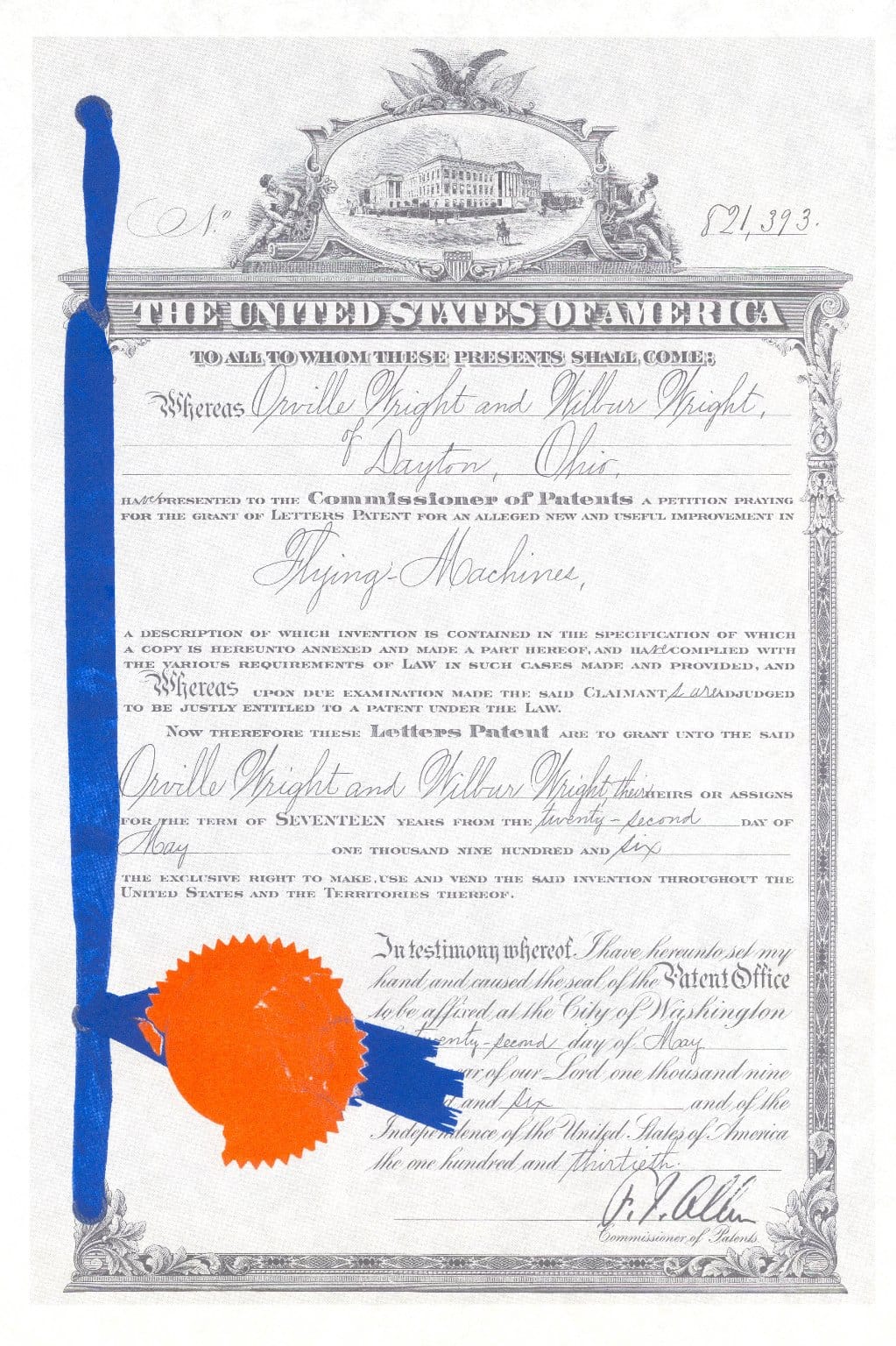
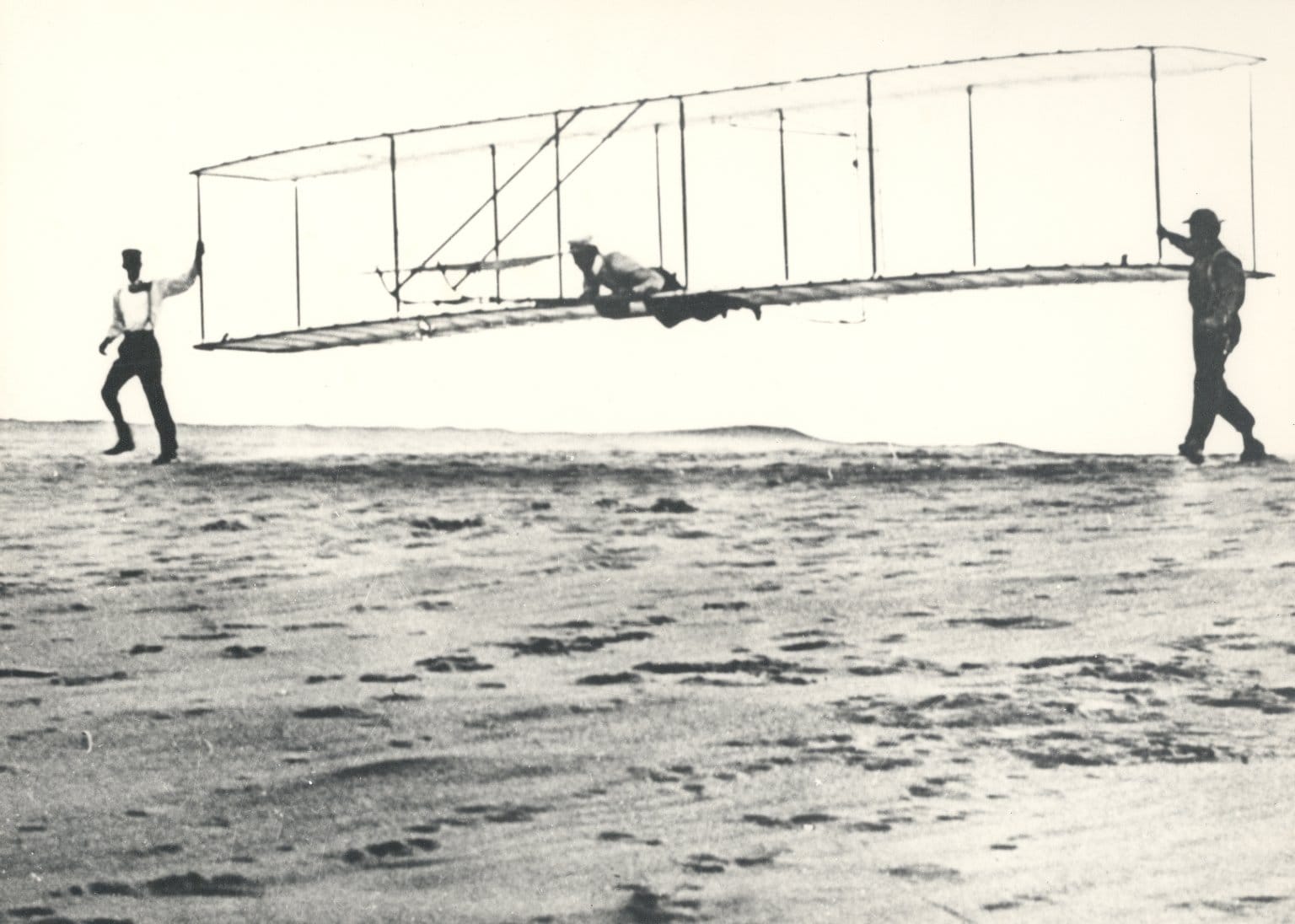
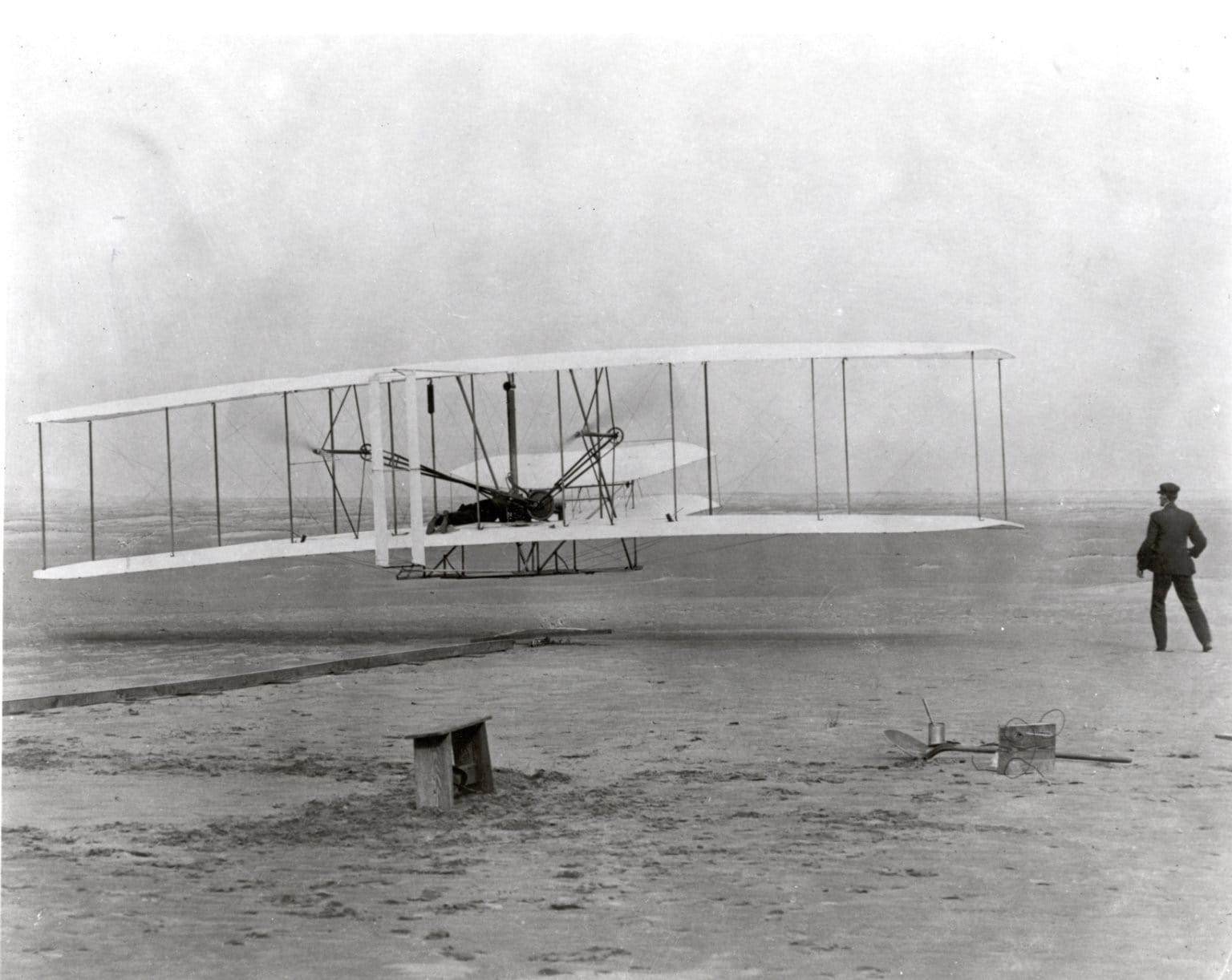
The Wright brothers accomplished this feat on December 17, 1903 at Kitty Hawk, North Carolina. This first flight lasted 12 seconds and covered a distance of 120 feet.
§§§

§§§
§§§
§§§
I taught English in Seoul from the summer of 1988 through the summer of 1989. Especially around the beginning of my stay, large and sometimes violent anti-American protests occurred, though it’s important to note that this violence was mostly directed at property, police, or symbolic American targets, like an embassy, rather than at people. Broadly speaking, the protestors opposed what they perceived, not without reason, as American support for the authoritarian and repressive rule of Chun Doo-Hwan, which in their minds included America’s choice not to intervene in the massacre that followed the Gwangju Uprising. These protests were covered in the American media, and I remember my grandmother calling me and urging me not to go out into the city lest I find myself the target of the protestors anger. I was aware of the protests, of course, but I assured her that they tended to take place in parts of the city far from where I lived and worked. Then, one day while I was out in the Myeong-Dong area of Seoul, I suddenly found myself in the middle of a huge protest. I was walking down the street in the opposite direction from where the protesters were headed, and I remember standing still as a massive throng of chanting people surged around me. Some stared, but most, except to make sure they did not walk into me, paid no attention to me at all. It was a surreal experience and I wish I’d had a camera. I did not tell my family about it.
§§§
I wrote this in my journal in 1988:
A literature, a poetic, grounded in the belief that language has no reference to anything outside itself—which does not at the same time acknowledge and exploit our capability to give it such reference—will be a poetic devoid of humanity, not better than a technology, a computer, the mirror of a self-reflective world in the process of, frozen in, perpetual implosion.
In that same entry, I also wrote this:
Too much contemporary poetry is tired narrative of one form or another. Some is new. Martín Espada, for instance, writes rather plain narratives, at least in form, but because what he names, the lives of Hispanics, Latinos, is new, it makes the form new as well. And so, to write a poetry of male feminism requires a new form because the “maleness” of the content will [otherwise] pull the narratives in the same old directions.
And both of those excerpts were prefaced by this, which I wrote in response to passages in Hugh Kenner’s “Magic and Spells:”
This is what bothers me about some language poetry and much traditional free verse lyric and narrative: there is no naming, or the names are always the same. The problem with writing concerned [only] with the process of its own making…is its tendency to lose sight of the naming function of language. A name is not a fact; it is something arrived at and it changes as our perceptions of/perspective on the named thing changes.
Setting aside first the way I confused the arbitrariness of the sign with the act of consciously, proactively choosing to name something and, second, the kind of sweeping generalizations about poetry that I hope I no longer make, what struck me when I read this was how immediately I recognized it as the root of many of my preoccupations as a poet today, almost forty years later.
§§§
A couple of weeks ago, on one of the rare occasions that I was scrolling through Facebook, one of my sisters—I have two and we are estranged, as they are long-estranged from each other—appeared in my “People You May Know” stream. I was surprised to see her there, though I think the algorithm probably surfaced her because of a thread of mutual connections that we have on the platform that goes back to people we had in common nearly forty years ago. Anyway, I was curious, so I went to her profile page to see what I could see, and I was pleasantly surprised to learn that she has begun making and selling some truly beautiful art. “Pleasantly surprised” is actually not quite accurate. I was happy for her. I remembered a conversation I had long forgotten when I tried to convince our grandmother to buy her as a graduation gift a truly high quality set of artist’s tools: paints, brushes, colored pencils, whatever. My sister had talent and she had talked to me at the time about wanting to develop it. My grandmother, however, demurred. “She’ll never be able to make a living doing that,” she said. I don’t remember what gift she bought instead, but as far as I know my sister stopped drawing after high school. So it made me happy to see her making art and also sad, since—and you will have to take my word for this—my happiness for her is not sufficient reason to reach across the chasm of our estrangement.
§§§
When I was teaching ESL, I always made sure to spend at least one class, and often two, teaching obscenities and slang expressions. I told my students they needed to know these words because they were going to encounter them, either in conversation or in media, and so it was important to know what they meant. I also encouraged them to bring to class any words or expressions they heard that they didn’t understand. It made for some very interesting conversations, as you might imagine. Try explaining why it’s an insult to call someone a “douche bag,” especially when douche in their language simply means shower, not to mention try to make sense for them, if they do not find it obvious, of the misogyny inherent in the insult. I taught this lesson for two reasons. I’ll tell you one story this issue and save the other one for a later one. This one isn’t actually mine. A colleague told me that one of her students came into her office and said, “Professor, what does fuck you mean?” When my colleague asked why she wanted to know, the student explained that she’d been on a bus in Manhattan and trying to explain to the driver that she needed a transfer ticket—which tells you how long ago this story took place. Since she couldn’t remember that phrase “transfer ticket” in the moment, she was using sign language to get her point across. She could tell the bus driver was getting frustrated, but when he told her Fuck you! Go sit down!, since she didn’t know what that expression meant, she simply bowed slightly—she was from an East Asian country, but I don’t remember which one—said, “Thank you very much,” and took her seat. It wasn’t that she didn’t understand the man’s tone, but she’d had no idea he’d used an obscenity to express himself. I started teaching the lesson that semester.
You are receiving this newsletter either because you have expressed interest in my work or because you have signed up for the First Tuesdays mailing list. If you do not wish to receive it, simply click the Unsubscribe button below.
In a world that seems more and more troubled by disruption, It All Connects is where I work out for myself how to live in, with, and through the identities that define me.




Member discussion