Four by Four #57
Four Things To Read, Four Things To See, Four Things To Listen To, and Four Things About Me

Dividing Rivers, by Ivy Schweitzer:
When I vow never to watch the play again
where loving to death is the only resistance,*
they turn their backs,
mount their seats and
ride off—together.
The play in question in this poem, “Death in Stratford,” is Shakespeare’s Othello, which I haven’t read in many, many years. The poem’s occasion is a meeting between Schweitzer’s speaker and the actors who play Othello and Desdemona in a production that the speaker just saw. The speaker tells us she’d forgotten that Othello actually kills Desdemona twice, once by smothering, when he “swear[s] he will love her/‘after,” and the second time by strangling her “with her own sheets,/forgiveness staining her lips.” When the speaker asks the actors how they “act it over and over”—Schweitzer relies on the verb “croak” to render how the question is asked, allowing us to decide precisely what emotion is behind it—the woman who plays Desdemona, whom we know is white because we know the play and not because the poem mentions race at all, explains that they get their motivation from the need to make sure that the audience “get[s] it:”
“[T]hey are both victims of white patriarchy
but resist it
by loving, dying, Othello killing her and them himself out of a world
they cannot survive in—“
That statement elicits the vow I quoted above which also how the poem ends, but the tension between what the vow implies—that the speaker is committing herself to a search for a form of resistance rooted in a life-affirming love—and the way in which the actors turn their backs on that implication is in many ways the tension that animates Dividing Rivers as a whole. The book begins with poems that confront the antisemitism Schweitzer has experienced, allowing that confrontation to allude to the history of Jewish oppression, and then moves into poems that explore the relationship between Jewishness and the whiteness into which Jews who can pass as white have been allowed. The poems that dominate in the third of the book’s three sections explore Schweitzer’s not-always-successful but always contingent attempts to move back and forth across the “dividing river” that gives the book its title. That crossing, the willingness to attempt it, to take responsibility for the attempt, and to be held accountable for it is where this book locates its moral center, the life-affirming resistance I wrote about above. (In the event you are interested, I wrote an epistolary essay about racism and antisemitism ten years ago called “The Lines That Antisemitism and Racism Draw.” It was published by Unlikely Stories.)
§§§
We Liked Remote Work. Then We Looked at the Data, by Emma Harrington and Natalia Emanuel:
Our estimates,published in Science this month with our collaborator Amanda Pallais, indicate that remote work explains a third of the deterioration in mental health between 2011 and 2024. Our research doesn’t suggest that work can occur only in the office. But it does mean that employees and companies should make a greater effort to prioritize face-to-face time with colleagues.
I remember when my campus pivoted during the pandemic not just to online instruction, but to online everything. The Zoom screen felt at first like a lifeline out of the shutdown-imposed isolation. Eventually, though, the students for whom Zoom was not working began to make their voices heard. Sometimes the reasons were practical and logistical, having more to do with socioeconomics than anything else: inadequate technology, living arrangements that made it impossible for them to have the time and space to do schoolwork, the need to take on as much work as possible to make up for lost family income. Sometimes, though, they had to with the ways in which Zoom was an inadequate way of delivering the services students needed. This was especially true for students whose learning disability made working through a screen difficult if not impossible. I remember one student going on a rant in which she accused me, the school, the school’s center for student with disabilities, and anyone else she could think to name of being both ableist and racist, since she was not going to be able to pass her classes without the services she was legally entitled to and that none of us were providing her because Zoom made it impossible. (This may not longer be the case, but it was back then.) When she finished speaking, she logged off and, though I did try to contact her by email, I never heard from her again. It was heartbreaking to listen to her and guilt-inducing, even though there was no reason for me personally to feel guilty. It’s a bit of a leap from that story to the statistic about remote work and mental health that I quoted above, but that’s the leap I made, though in the opposite direction, when I read this essay. Working remotely takes things from us. I think it’s important to phrase it that way, as opposed to saying we lose things when we work remotely, because it’s not as if workers are the ones truly in control of what remote work means. After all, remote work opens up possibilities of and justifications for increased worker surveillance that we would resist in an office, and the pressures and anxieties imposed by that kind of surveillance, on top the isolation imposed by working from homee, can’t be good for anyone.
§§§
Men in the Sun and Other Palestinian Stories, by Ghassan Kanafani, translated by Hilary Kilpatrick:
“No, my friend, I won’t come to Sacramento, and I’ve no regrets. No, and nor will I finish what we began together in childhood. This obscure feeling that you had as you left Gaza, this small feeling must grow into a giant deep within you. It must expand you must seek it in order to find yourself, here among the ugly debris of defeat.
I won’t come to you. But you, return to us! Come back, to learn from Nadia’s leg, amputated from the top of the thigh, what life is and what existence is worth.
This quote is from the epistolary story called “Letter from Gaza,” which Kanafani wrote in 1956. The letter-writer is a Palestinian man who’d planned for most of this young life, along with the friend to whom the letter is addressed, to escape Palestine and the Israeli occupation and live the life of luxury and freedom he imagined would be his in the United States. He changes his mind when he visits his niece Nadia who “lost her leg when she threw herself on top of her little brother and sisters to protect them from the bombs and flames” of an Israeli attack. What rescues that ending from sentimentality is the writer’s honest assessment of the kind of self-hatred that defeat can inculcate in a person—without once naming it as self-hatred. Kanafani, one of the most important writers of his generation, has been translated into more than seventeen languages. He was also the spokesperson for the Popular Front for the Liberation of Palestine. He was assassinated in Beirut by Mossad in July 1972. His niece, who was in the car with him, was also killed. As art, the stories in this collection, written between 1956 and 1969, are important in their own right; as art that emerges from the history of Israel’s genocidal war in Gaza, they ought to be required reading.
§§§
Listening to Cassandra: Misogyny, Classical and Modern, by Rebecca Solnit:
Sometimes it feels that there is nowhere I can turn without running into violence against women.
This essay demonstrates the truth of that statement with devastating clarity, starting with the arrest of the Tate brothers and weaving in current events, classicist Mary Beard’s essay “The Public Voice of Women” (which I now have to read), Jean Rhys’ Wide Sargasso Sea (which I read decades ago and is probably worth rereading), gender and translation practices, Graham Platner, and more. The essay defies easy summary. You should just go and read it.
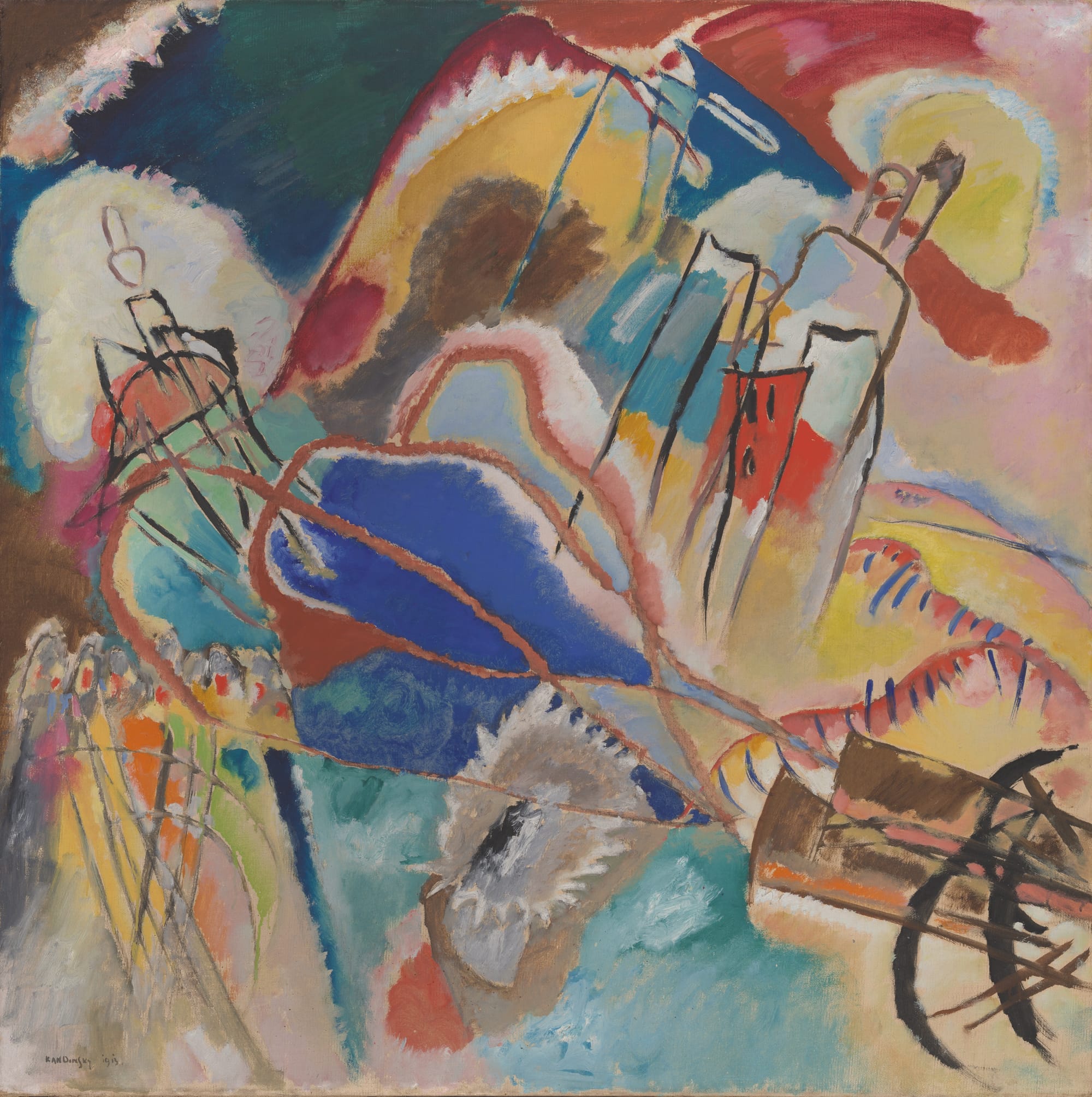
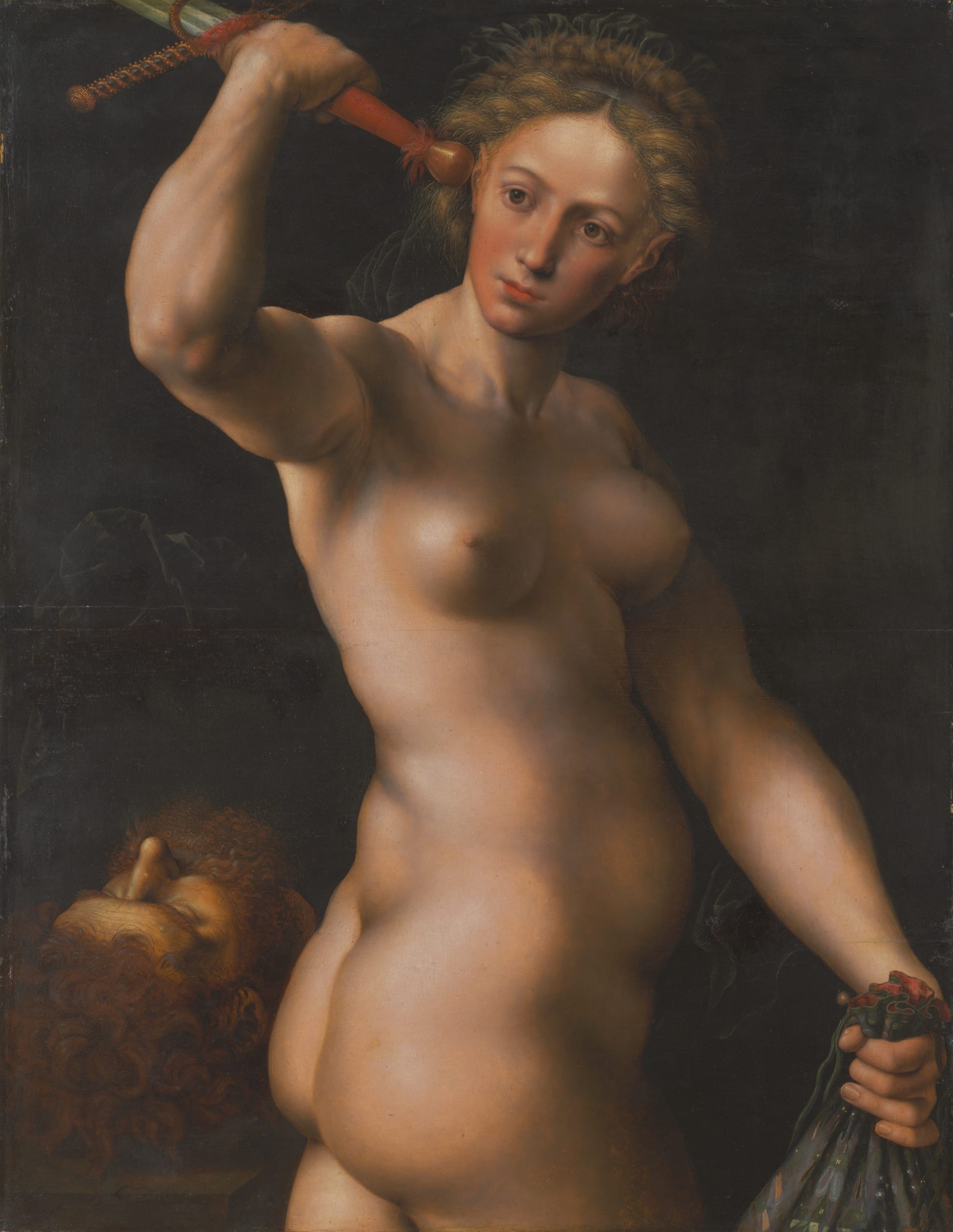
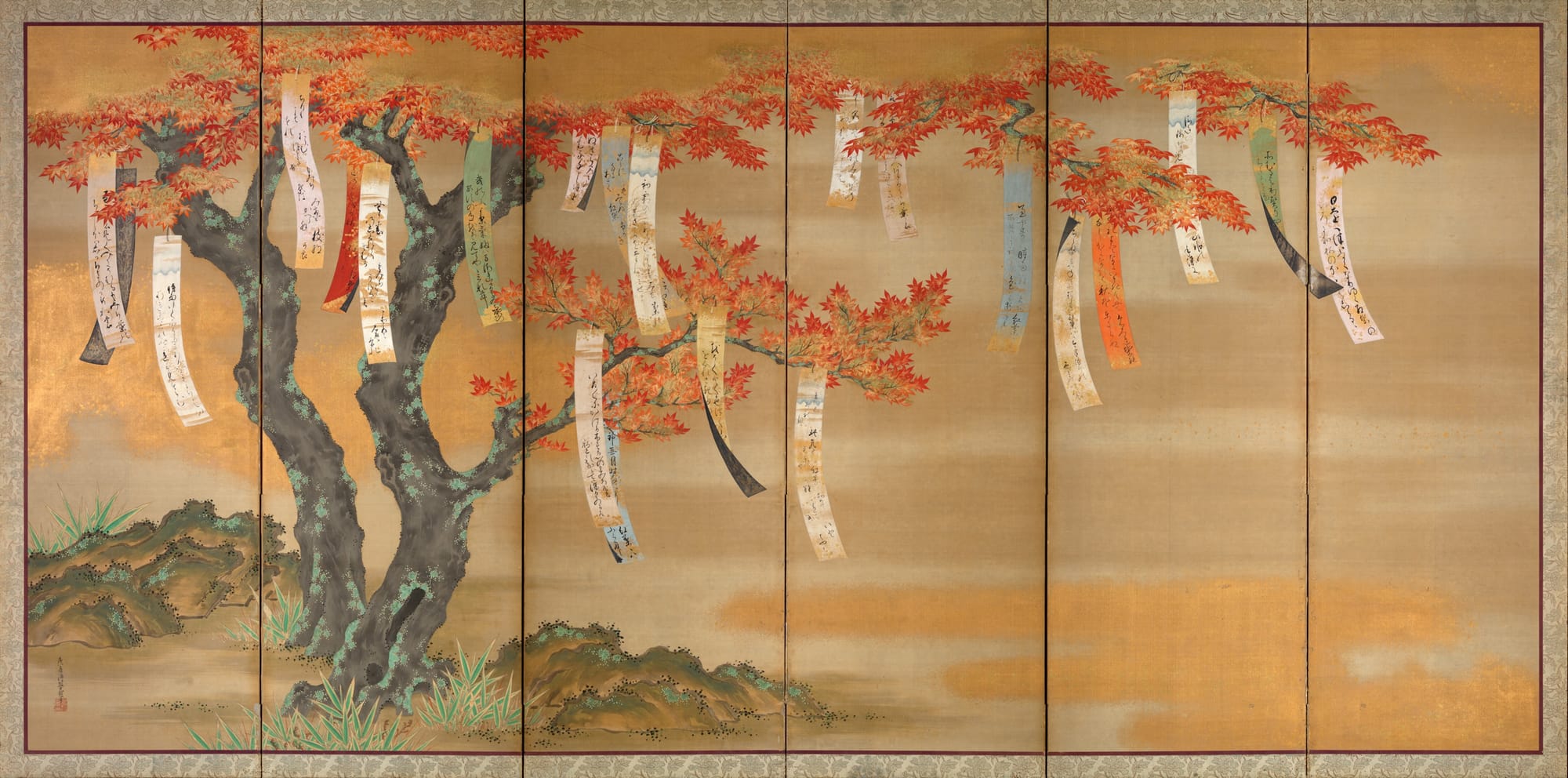
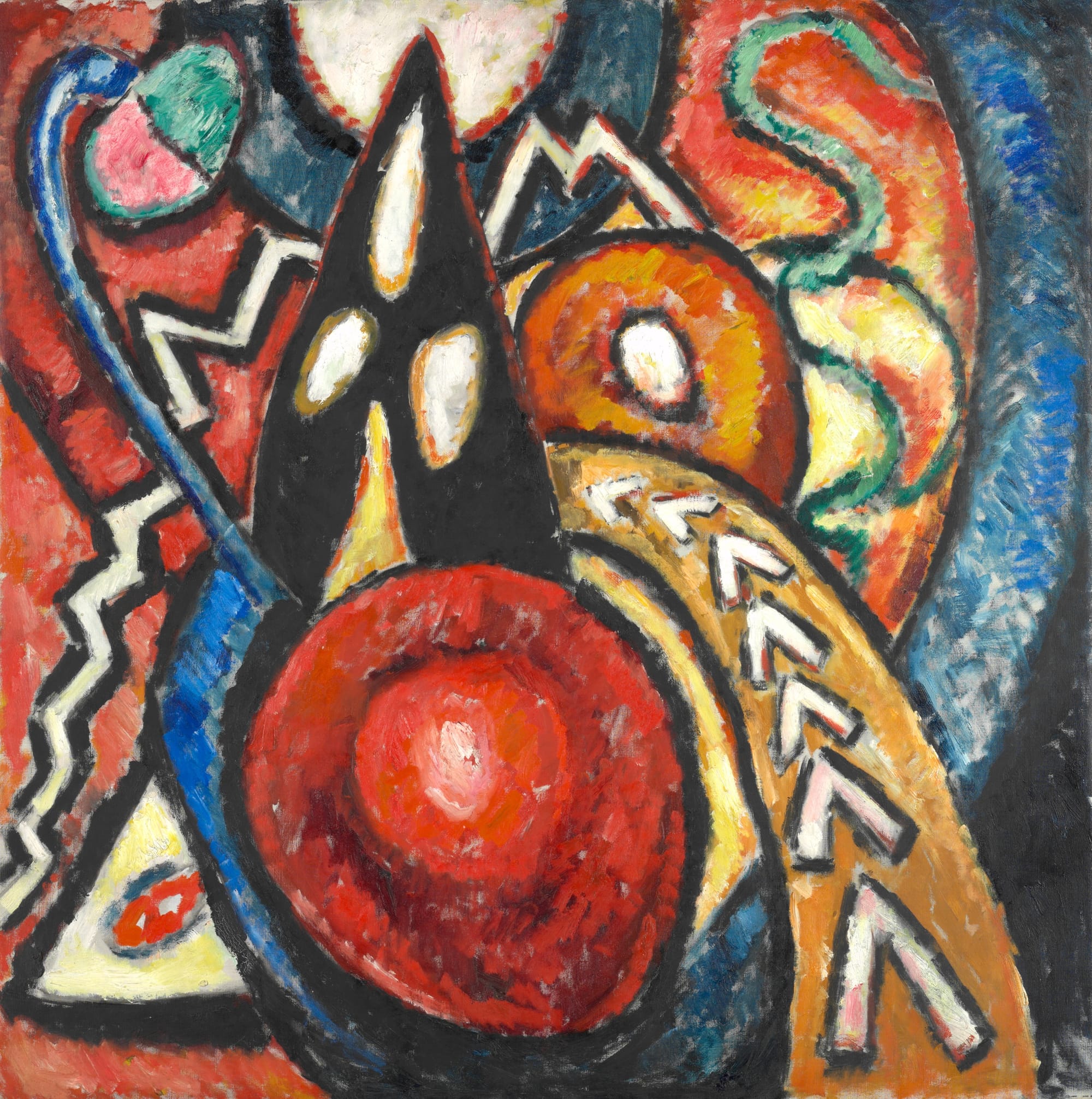
These images are from The Art Institute of Chicago and all text is adapted from the Institute’s website.
In his 1912 book Concerning the Spiritual in Art, Vasily Kandinsky made an analogy between music and painting as two means of abstraction, a radical mode of artmaking that freed color and line from their traditionally representational functions. Between 1910 and 1914 he produced “improvisations,” works he described as unconscious, spontaneous expressions. Kandinsky commented on Improvisation No. 30 (Cannons) in a letter to Arthur Jerome Eddy, a friend and collector from Chicago: “The cannons … could probably be explained by the constant war talk going on through the year [but] the true contents are what the spectator experiences while under the effect of the forms and color combinations of the picture.”
§§§
Jan Sanders van Hemessen portrayed the Jewish heroine Judith as a muscular nude to be both admired and feared. When the Assyrian army threatened Judith’s people, the handsome widow saved them from slaughter by infiltrating the tent of the enemy general, Holofernes, to win his confidence and then behead him. Van Hemessen’s life-size interpretation reflects contemporary male ambivalence toward female agency. It celebrates Judith’s physical and moral strength but also foregrounds the sexuality that enabled her triumph, reproducing for viewers the aggressive beauty that caused her adversary’s demise.
§§§
In the seventeenth century Japanese aristocrats often composed and recited classical poetry while viewing foliage at appointed times of the year. During festivities, poems would be carefully written on patterned slips of paper (tanzaku) and tied to the branches of trees. In this screen, the premier court painter Tosa Mitsuoki described the inevitable transience of beauty by imagining the melancholy hours after the departure of the reveling courtiers, who had created poems with quotations of appropriate seasonal poetry from twelfth- and thirteenth-century anthologies inscribed on the narrow strips. The slips flutter in the gentle breeze, fastened to a maple bursting with red leaves in autumn.
§§§
Unlike many other American artists, Marsden Hartley was more drawn to German Expressionism than to French modernism, and executed this painting in Berlin. Made on the eve of World War I, Movement possesses a turbulent energy that sparks associations with both the vibrancy of modern Berlin and movements of music. Like the Russian Expressionist painter Vasily Kandinsky, Hartley sought to make his work more like music, which he admired for its nonnarrative nature and its potential to be purely spiritual or separate from material reality.
§§§
§§§
§§§
It’s been a very hectic, busy month for me, and I have not had the time to write “things about me” the way I usually do. So, for July, I share with you four photographs taken by me, with brief commentary.
I took this picture last month somewhere in my neighborhood. There are a lot of really lovely gardens in Jackson Heights. I wish I could get into the habit of noting on the block and garden in which I find the ones I take pictures of.

§§§
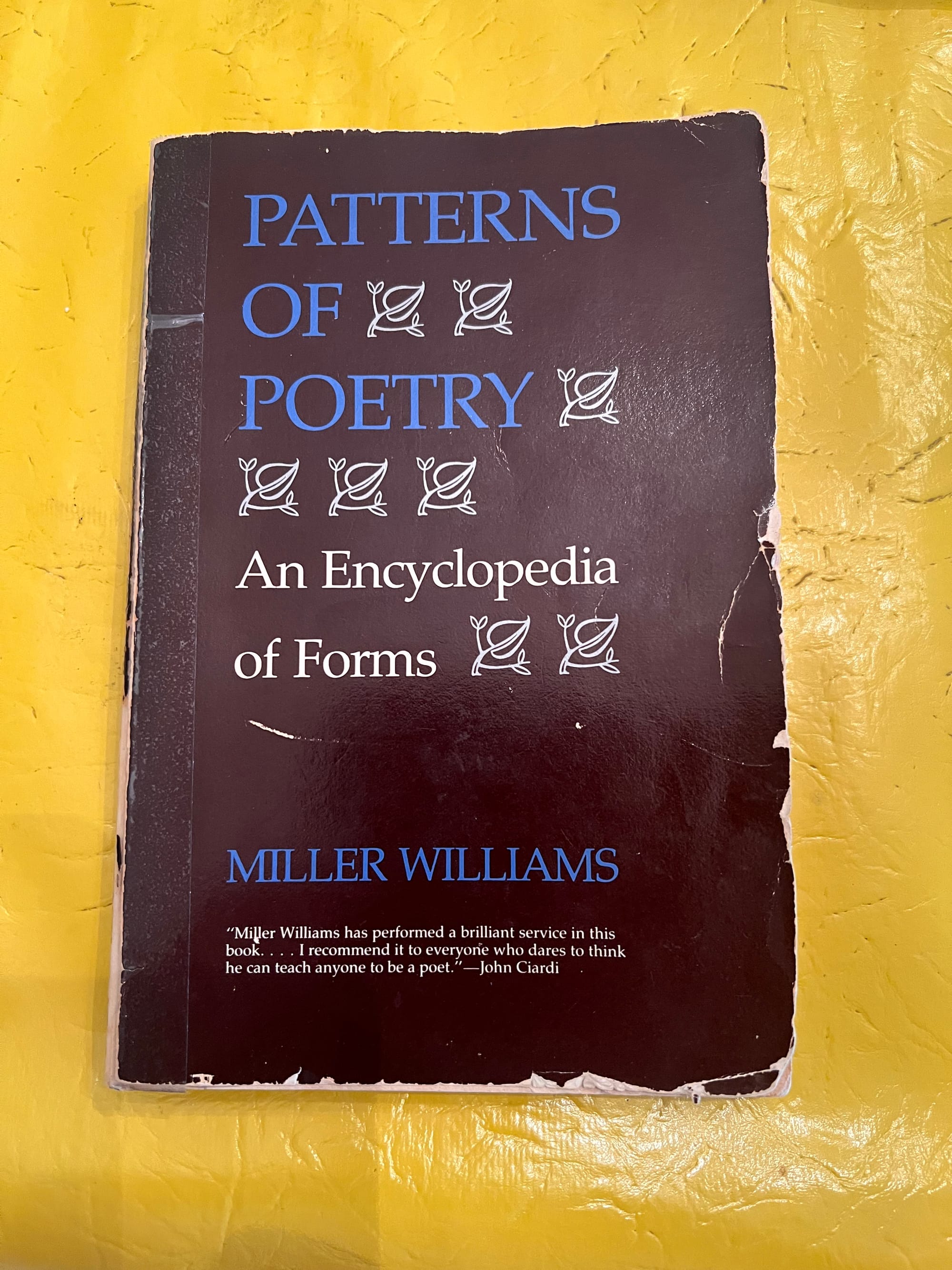
Two or so years ago, I began to write one poem in each of the traditional forms Miller Williams collected in this encyclopedia, which, as you can tell from the condition of the book, I’ve had on my shelf since the 1990s, when I bought it new. I finished this project, which I called “Finger Exercises,” earlier this month when I completed a poem using Anglo-Saxon meter, the 74th traditional form in the book. I chose that title because I thought of writing the poems as akin to the scales musicians might play to warm up before a performance, or that students need to practice in the process of learning their instrument. I don’t know what I will do with these poems yet—I tried to follow each form as strictly as possible—but it was a fun and in some ways liberating experience to write them for no other purpose than to see what I could learn from writing them.
§§§
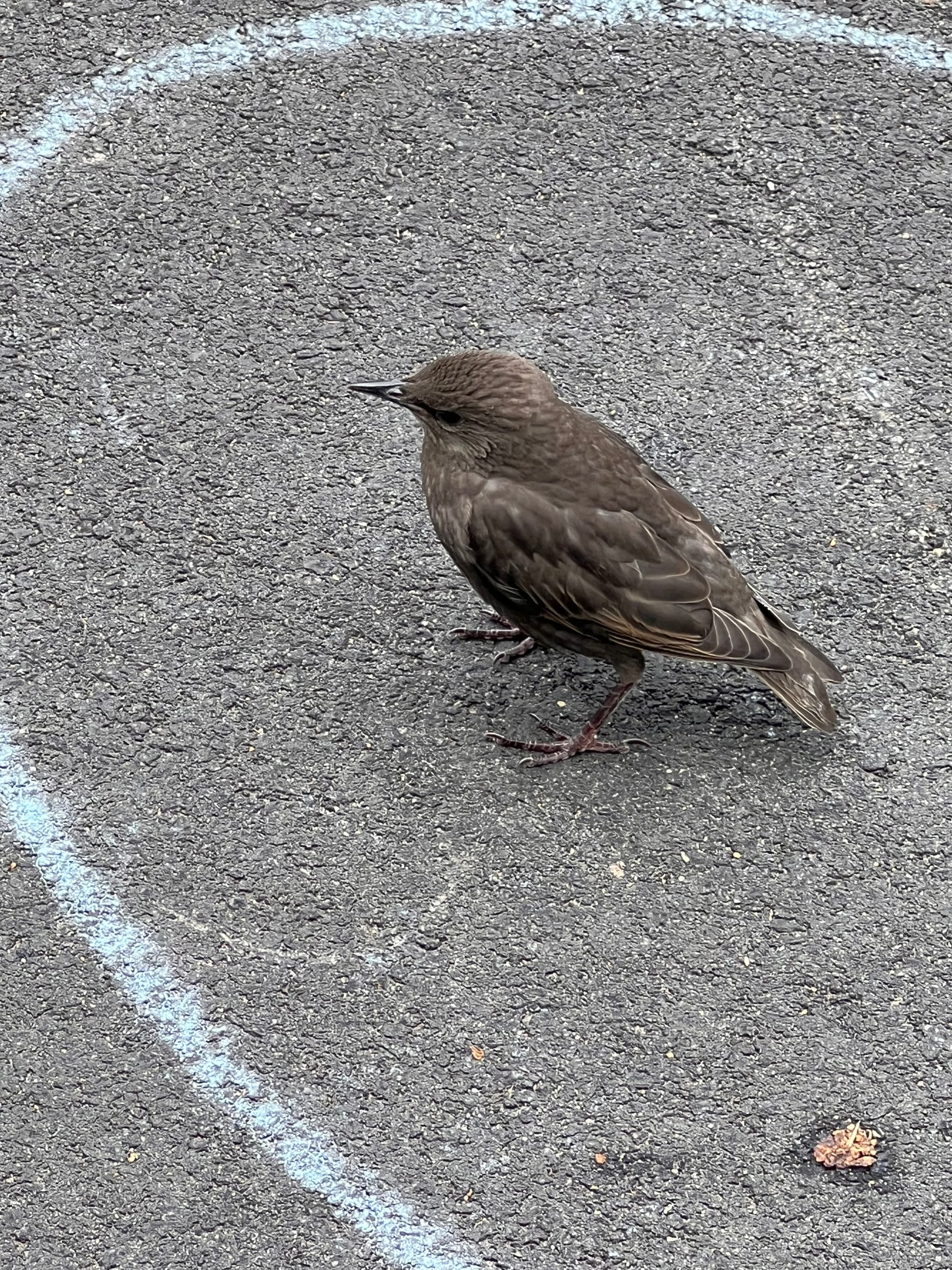
I would have called this a kind of sparrow, but Google tells me it’s a juvenile European starling. My wife and I were walking through Central Park and it hopped up to where we were standing and just stood there like this, as if it were “ready for its closeup.”
§§§
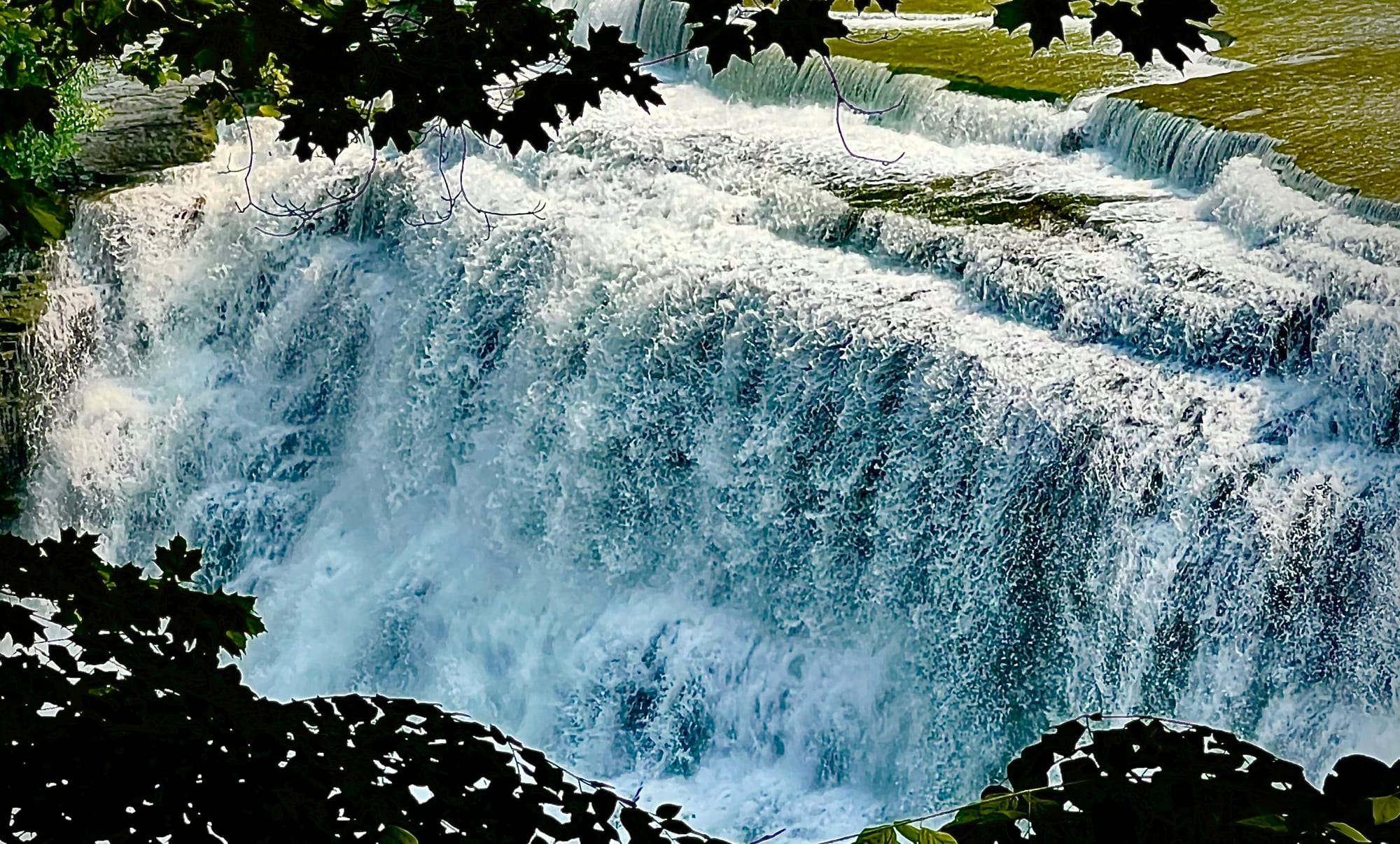
Last year, my wife, my son, and I took a trip to Letchworth State Park. This is a picture I took of one of the waterfalls that I then put through a bunch of filters until, at least to me, it looked like a painting I kind of wish I could have painted.
You are receiving this newsletter either because you have expressed interest in my work or because you have signed up for the First Tuesdays mailing list. If you do not wish to receive it, simply click the Unsubscribe button below.
In a world that seems more and more troubled by disruption, It All Connects is where I work out for myself how to live in, with, and through the identities that define me.


Member discussion