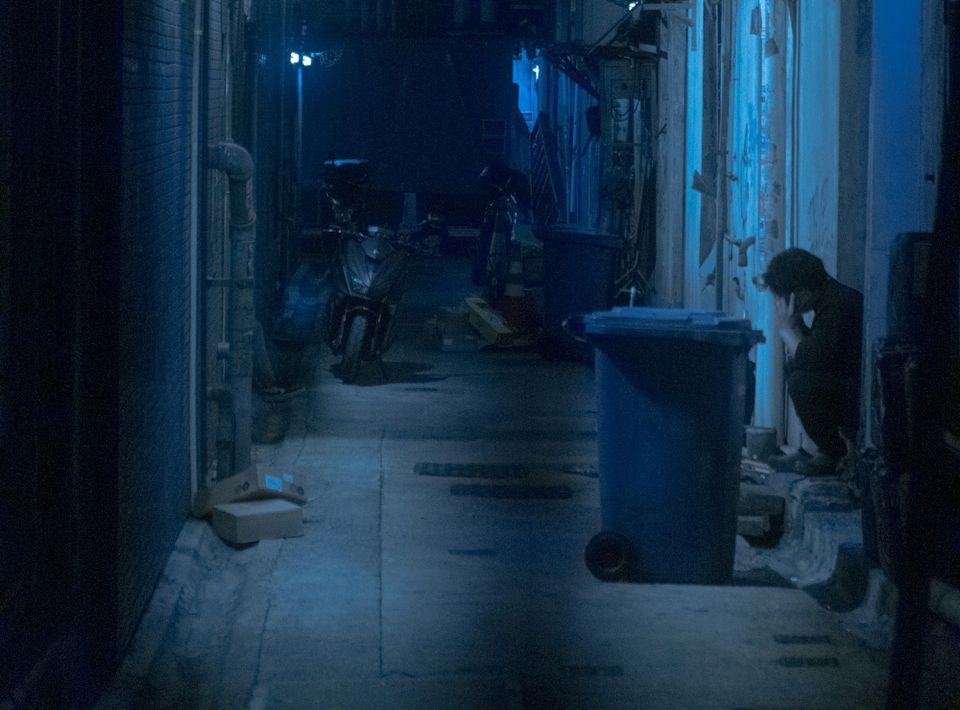
I may not look over my shoulder when I walk down the street the way I did back then, but there are definitely places in both this country and out in the world at large where I wonder how safe I would be as a Jew who insisted on being visible as a Jew.
I have taken the title of this post from a line in one of the poems in my next book, 2020, which will be published by Fernwood Press in fall 2027. The poem’s title is “Thinking, At The Beginning of the Pandemic Shut-down, About Rabbi Wehl’s Tenth Grade Mussar Schmoozes.” These are the first two stanzas:
“Do not believe the goyim when they smile or offer you their open, outstretched hands. That small-nosed, blond-and-blue-eyed shiksah I know you want will never truly love the Jew she’ll try but fail to suck from you; and when the Nazis come again, and come they will, it will be too late.” Reb Wehl slapped his palm hard on the desk. “Don’t forget! Kol yisroel arevim zeh lazeh is the only reason klal yisroel survives.”
In the town that taught me how to live like prey, it was impossible to call him wrong. I learned early which streets were safe to walk and which would almost every time become— “Fuck you, ya cheap fuckin’ kike! Pick ‘em up!”— a gauntlet of fists and rocks, bottles, and pennies that hit their target even when they missed.
While mussar is not technically sermonizing in the top-down moralizing sense of sermons-from-the-pulpit—it might be better described as a kind of spiritual pep talk, something designed to inspire personal introspection—Rabbi Wehl’s schmoozes often felt like sermons. He criticized us constantly for not being good-enough Jews, and he consistently held what he believed was the inevitability of a Nazi resurgence in the United States over our heads. According to him, our failure to be good Jews would make it that much easier for the new, American Nazis to wipe us out. In his mind, communal solidarity was the only appropriate response to that inevitability. Kol yisroel arevim zeh lazeh (כל ישראל ערבים זה לזה) is an expression meaning, essentially, that all Jews are responsible for and accountable to one another; and klal yisroel (כלל ישראל) refers to the Jews as a collective.
In Reb Wehl’s estimation, interfaith dating would irreversibly dilute that solidarity, as would indulging the fantasy that your non-Jewish friends and neighbors were anything other than Jew-haters at their core who would betray you the moment the resurgent Nazis forced them to make a choice. As far as I know, Reb Wehl was not a Zionist. It’s important, therefore, to understand that the word yisroel in both the expressions he used had nothing to do with the State of Israel. It is, rather, a usage that long predates 1948 and is drawn from the moment in Genesis 32 where God changes Jacob’s name to Israel.
The yeshiva high school in which Reb Wehl was my teacher, however, where I was a student from eighth through eleventh grade, was fervently and unapologetically Zionist in orientation. The Zionism I was taught during those years, however—or, perhaps more accurately, what I was taught to call Zionism during those years—had more to do with kol yisroel arevim zeh lazeh than with what I have long since understood to be the Zionism-in-practice that has now found its ultimate expression in the genocidal violence the current Israeli government is committing against the Palestinians.
I did not come from a religious family, but I wanted very much to live a religiously observant life. Nonetheless, while I found Judaism’s ancient roots in the part of the world where the State of Israel now exists to be deeply meaningful, the idea that I should claim that place as my ancestral homeland, that I belonged there more than I belonged here, left me cold. It wasn’t till I experienced both the all-too-often violent antisemitism that for a good portion of my teenage years became a fact of my daily life and the precise indifference-at-best with which Reb Wehl had predicted my non-Jewish friends would respond that I began, that it was nearly impossible not, to idealize and romanticize the existence of a place where I would never have that experience, where I would not be a minority, and therefore where I would never have to explain or defend myself simply for being Jewish.
I took pride in and drew strength from the story I’d been told about Israel’s founding, that it rose against all odds from the ashes of the Holocaust and that it had fought successfully and (of course) as humanely as possible for its existence in a “neighborhood” that on a much larger scale was at least as hostile to its Jewish being as the town I lived in was to mine. I still didn’t see Israel as my homeland, but the necessity of its presence in the world as a safe haven for the Jews seemed to me irrefutable. It took a long time for me to recognize the surrender inherent in that position, that it meant I had essentially ceded the rest of the world to, as Reb Wehl would have put it with a sneer in his voice, “the goyim.”
Last month, I gave you a glimpse of how growing up in that town under those circumstances resulted in that sense of surrender. This month, I’m going to continue that story into my teen years, not because my experience is unique—I know that’s not the case—but because I am consistently surprised at how many people are shocked to find out that it took place not in some Eastern European city or in the United States, say, in the 1930s or 40s, but in the late 1970s, in a suburb close enough to New York City to be part of the city itself. I also want to tell you my story because what I experienced back then continues to shape, viscerally, how I understand and respond to antisemitism in general and its current politicization on both the left and the right in responses, Jewish and otherwise, to the wars Israel is prosecuting in the Middle East, in particular its genocidal campaign against the Palestinians.
§§§
When it comes to Jewish holidays, mainstream American (read secular Christian) culture is familiar with just four: Rosh Hashanah, Yom Kippur, Pesach (Passover), which gets the recognition it does because of its proximity to Easter, and Chanukah, which gained its recognition because its dates often coincide with the gift-giving Christmas holiday season. Other holidays are acknowledged at most by the fact that in places like New York City, where a lot of Jews live, alternate side of the street parking is suspended—a governmental concession to the fact that driving is prohibited on those days, as are many of the same activities that are prohibited on Shabbat, like earning money or writing or using electricity. Despite their obscurity, however, these holidays are religiously and spiritually far more important than Chanukah. One of them is Sukkot, which begins five days after Yom Kippur. Sukkot lasts for a week, but only the first and last two days are considered full holidays when work and other related activities are forbidden.
As I said earlier, my family was not observant, but I wanted to be, so when these other holidays fell on a weekday during the school year, I would stay home so I could go to shul. When I was in elementary school, a note from my mother explaining my absence was sufficient to demonstrate that I hadn’t been playing hooky. In seventh grade, however, my junior high school’s truant office called my home on the first day of Sukkot to find out why I was absent. I could hear the surprise in the voice of the woman on the other end of the line when she realized that I was the one who’d picked up the phone. “Why aren’t you in school?” she asked, her belief that she’d caught me red-handed palpable in her voice. I explained to her that it was a Jewish holiday and that I’d just gotten home from synagogue. She called me a liar. “There is no such holiday,” she said. “There are Jewish people working here in the office right now.” When I suggested to her that maybe the people in her office had come to work because they were not observant, she said, “You think you’re clever, don’t you?” Then she asked if my mother was home. I don’t remember if she was or not, but I do remember hearing the woman on the phone say to whomever was close enough to hear her, “They’re all alike, the Jews, aren’t they?”
In the end, I didn’t get in trouble for missing those two days of school, which probably means my mother somehow documented that I’d had her permission to stay home. Nonetheless, the incident has stayed with me for all these years because it was the first time I experienced not just the kind of bias my sixth grade music teacher exhibited, which I told you about last month, but an institutional authority informed by a willful ignorance about and indifference to Judaism and Jewish culture, not to mention the possibility that I could have suffered real harm as a consequence.
Largely because I switched after seventh grade from that school to the yeshiva where Rabbi Wehl was my teacher, that kind of institutional antisemitism receded almost completely from my life. A version of that truant officer’s indifference, however, did define the context in which I experienced every other incident of antisemitism that was directed at me.
This post is for paying subscribers only
Subscribe to continue reading
You might also like
On My Desk Now: Ekphrastic Poetry
Generally speaking, ekphrastic poetry is not my thing, but I was recently invited, along with several other poets, to be
Craft Talk: Don’t Ask A Poem To Do The Work Of An Essay
We do not, and we should not, assume that the speaker of a poem is autobiographically identical with the poet, even when the poem is written in the first person, even when we know that the speaker and the poet share some aspects of the experience the poem contains.
paid-only post
Four by Four #59
Four Things To Read, Four Things To See, Four Things To Listen To, and Four Things About Me
On My Desk Now: Why I’ve Gone Back to Read Essays I Wrote About Reproductive Rights and Masculinity Almost Forty Years Ago
paid-only post
It's The Twenty-Fifth Anniversary of the September 11th Attacks and It's Erev Rosh Hashanah
If you are celebrating, Shana Tovah! I hope we all get the sweet and fulfilling and meaningful and just and peaceful year that we all deserve.