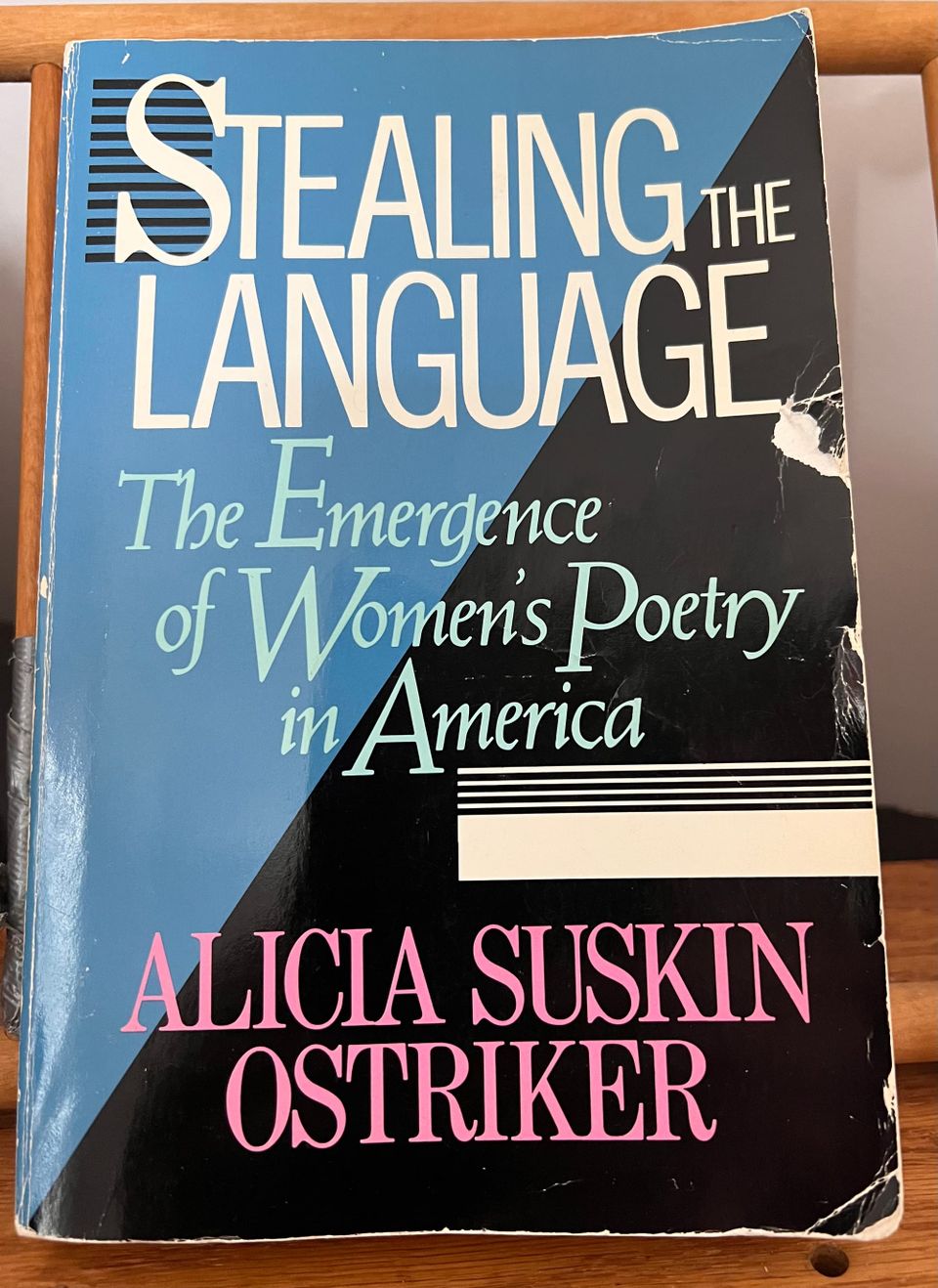
I could not have articulated it this way back then, but I felt straitjacketed by much of the male poetic tradition in which I was being educated and in which I understood I would be expected to write
I stopped teaching a little over a year ago, in May 2025, but my retirement did not become official—and, to be honest, I did not truly feel retired—until that September, when the fact of not having to go back to campus for the start of the new academic year became reality. This September first, in other words, just a couple of weeks away, my retirement will be exactly one year old, which doesn’t sound like much of a milestone, but I’ve been thinking a lot as the day approaches about what has changed during the past twelve months and how those changes will shape this next stage of my life. One thing I’ve noticed is how much more integrated I feel as a writer, by which I mean that I have been making connections between and among ideas that have been circling my brain for a very long time. I’m excited by this, and I’d like this month to tell you about one example.
When I read Alicia Ostriker’s Stealing the Language in the late 1980s—I was not yet thirty years old—I was just beginning to figure out who I was as a poet, who I was as a survivor of childhood sexual violence, and what the relationship between those two identities might mean for the kind of writing I wanted to do. I’ve written elsewhere about how I first recognized myself as a survivor through the lens of the feminist critique of men’s sexual violence against women, and also about the silence in which experiences like mine were shrouded. In that context, Stealing The Language was a revelation.
I could not have articulated it this way back then, but I felt straitjacketed by much of the male poetic tradition in which I was being educated and in which I understood I would be expected to write, especially when it came to writing about the body, about my body in particular, and about what the men who violated me did to me. I’m not going to try to cite specific examples, since I have no clear memory of which male poets I was reading, but even in the erotic poems I read by men, even when those poems were explicit in their eroticism, I sensed a line the poets would not allow themselves to cross in writing about what it felt like to inhabit the vulnerabilities, sexual and otherwise, of a male body.
I did not think of this as willful dissimulation, but I remember the shock of discovering just how heteronormative the range of my reading was when I picked up The Penguin Book of Homosexual Verse, and I remember as well feeling envious that, being straight, I did not have access within myself to what seemed to me at the time the effortlessness with which those poets brought their bodies into their poems. I wanted to make my language do that. To the degree I have succeeded, if I have succeeded at all, it is because of what I learned from reading Stealing The Language.
This post is for paying subscribers only
Subscribe to continue reading
You might also like
Craft Talk: Don’t Ask A Poem To Do The Work Of An Essay
We do not, and we should not, assume that the speaker of a poem is autobiographically identical with the poet, even when the poem is written in the first person, even when we know that the speaker and the poet share some aspects of the experience the poem contains.
paid-only post
Four by Four #59
Four Things To Read, Four Things To See, Four Things To Listen To, and Four Things About Me
On My Desk Now: Why I’ve Gone Back to Read Essays I Wrote About Reproductive Rights and Masculinity Almost Forty Years Ago
paid-only post
It's The Twenty-Fifth Anniversary of the September 11th Attacks and It's Erev Rosh Hashanah
If you are celebrating, Shana Tovah! I hope we all get the sweet and fulfilling and meaningful and just and peaceful year that we all deserve.
Learning To Love The Questions: Do All Writers Write with a Feminine Soul?
My body, in other words, physically rejects the idea that I write as anyone other than the man I am or that my experience as a man is therefore any less inclusive of everything you mean when you use the phrase “feminine soul.”